
Guide to Creating and Sending a Bookkeeping Engagement Letter with FigsFlow
2026 UK Bookkeeping Engagement Letter Template. Updated for March 2026 ICAEW AI standards. Includes a compliance checklist & legal clauses. Download now.
Client asks for bank reconciliation services. You agree. Two months later, they’re demanding full financial reporting and questioning why you’re charging extra. Sound familiar?
This scenario happens because bookkeepers skip the most basic protection tool available to them: a properly drafted engagement letter. The document defines your services, protects your fees, and prevents scope creep before it starts.
This guide shows you exactly what belongs in a bookkeeping engagement letter, why you need one for every client relationship, and how FigsFlow generates professional, legally sound letters in under 30 seconds. You’ll also find templates, real case studies, and practical steps to implement today.
Key Takeaways for Busy Bookkeepers
- Engagement letters are legal contracts that define services, fees, and responsibilities between bookkeeper and client
- Every client needs a signed letter before you begin work to protect both parties from disputes
- Letters must include 10 core elements covering scope, limitations, fees, data protection, and termination terms
- Digital signatures are legally binding in the UK, making electronic letters as valid as paper versions
- FigsFlow generates compliant letters in 3 steps taking approximately 30 seconds from start to send
Need a customizable template for your bookkeeping engagement letters? Browse our wide range of templates and start using them today!
Explore Engagement Letter TemplatesWhat is a Bookkeeping Engagement Letter?
A bookkeeping engagement letter is a formal written agreement establishing the professional relationship between you and your client. It functions as a binding contract outlining exactly what bookkeeping services you will deliver.
The letter specifies deliverables such as transaction categorisation, bank reconciliation, VAT return preparation, or payroll processing. More importantly, it states what you will not provide, preventing clients from assuming services you never agreed to perform.
Think of it as your professional boundary document. Without these boundaries documented in writing, clients inevitably expect more than you intended to deliver. The engagement letter creates mutual understanding before money changes hands or work begins.
Unlike informal proposals or quotes, engagement letters carry legal weight. Courts recognise them as enforceable contracts when fee disputes or service disagreements arise. This protection works both ways, safeguarding you from unreasonable client demands and protecting clients from unclear service terms.
❓ Confused About Engagement Letters vs Letters of Intent?
You’re not alone. Many bookkeepers mistakenly use these terms interchangeably. An engagement letter (LOE) is legally binding and defines your service relationship. A letter of intent (LOI) simply expresses interest before negotiations begin. Understanding this difference protects your practice.
Why Bookkeepers Need an Engagement Letter
Clear documentation separates professional bookkeeping practices from amateur operations. An engagement letter establishes you as a serious professional who understands business relationships require formal agreements.
- Prevents Scope Creep Immediately – Defines exactly what services you provide and what falls outside your agreement
- Provides Legal Protection in Disputes – Serves as indisputable evidence when fee or service disagreements arise
- Ensures GDPR Compliance – Includes privacy notices explaining how you handle sensitive financial data
- Demonstrates Professional Competence – Signals you operate a legitimate practice with proper procedures
- Clarifies Payment Terms Upfront – Specifies fees, billing frequency, and payment deadlines to prevent disputes
Every successful bookkeeping relationship starts with mutual understanding. Engagement letters create this foundation by documenting expectations in clear, enforceable terms.
Real-Life Case Study: How an Engagement Letter Saved £12,000
Sarah, a Manchester-based bookkeeper, quoted £300 monthly for basic transaction categorisation. Three months in, her retail client began requesting cash flow forecasts, inventory reconciliations, and consolidated reports.
Sarah hesitated to bill for the extra work, worried about damaging the relationship. By month six, she’d provided £12,000 worth of unbilled services. When she raised the issue, the client claimed these services were implied in the original agreement.
Without an engagement letter defining her exact deliverables, Sarah had no written proof. She wrote off the £12,000 to maintain the relationship.
A simple engagement letter stating “transaction categorisation and bank reconciliation only” would have given Sarah written proof when additional requests arose. She could have referenced it immediately, establishing that new services required separate agreements and additional fees.
Key Elements of a Bookkeeping Engagement Letter
Consider each component of your bookkeeping engagement letter as an integral part of your professional service offering.
| Element | Description |
|---|---|
| Parties and Contact Information | Full legal names and addresses of both bookkeeper and client, including business registration details if applicable |
| Scope of Services | Detailed list of specific bookkeeping tasks you will perform (e.g., bank reconciliation, transaction coding, monthly reports) |
| Service Exclusions | Explicit statement of services not included, such as tax advice, auditing, or financial planning |
| Engagement Period | Start date, end date or ongoing terms, and specific accounting periods covered |
| Fee Structure | How fees are calculated (hourly, fixed monthly, per transaction) including VAT treatment |
| Payment Terms | Invoice frequency, payment due dates, late payment consequences, and accepted payment methods |
| Client Responsibilities | Documents client must provide, deadlines for submission, and quality of records required |
| Data Protection and Confidentiality | GDPR compliance statement, how client data will be stored, processed, and protected |
| Professional Standards | Reference to bookkeeping professional bodies and ethical standards you follow |
| Termination Conditions | Notice period required, circumstances allowing immediate termination, and final billing procedures |
Bookkeeping Engagement Letter Samples
Seeing a complete bookkeeping engagement letter in context helps clarify how all the required elements come together in a real client agreement. Below is an example of a fully developed bookkeeping engagement letter that reflects UK best practice and regulatory expectations.
This sample demonstrates how to clearly define the scope of bookkeeping services, outline responsibilities for both parties, set payment terms, and include essential clauses around data protection, professional standards, and termination. It is written in plain English while remaining legally robust, ensuring clients understand exactly what they are agreeing to before work begins.
Use this sample as a reference point rather than a one size fits all solution. Every client relationship is different, and engagement letters should always be tailored to the specific services, risks, and commercial terms involved.
This Is Just the Beginning
What you see above is only a single example. With FigsFlow Premium, you gain access to engagement letter templates for over 100 accounting, bookkeeping, and tax advisory services. Plans start at just £8/month, giving you a scalable and compliant solution as your practice grows.
How FigsFlow Makes Engagement Letters (In 3 Simple Steps)
A well drafted engagement letter protects both you and your client. Avoiding these common mistakes ensures your agreements remain clear, compliant, and enforceable from day one.
Creating engagement letters manually takes 30-45 minutes per client. FigsFlow reduces this to 30 seconds with an automated three-step process that handles everything from service selection to digital signatures.
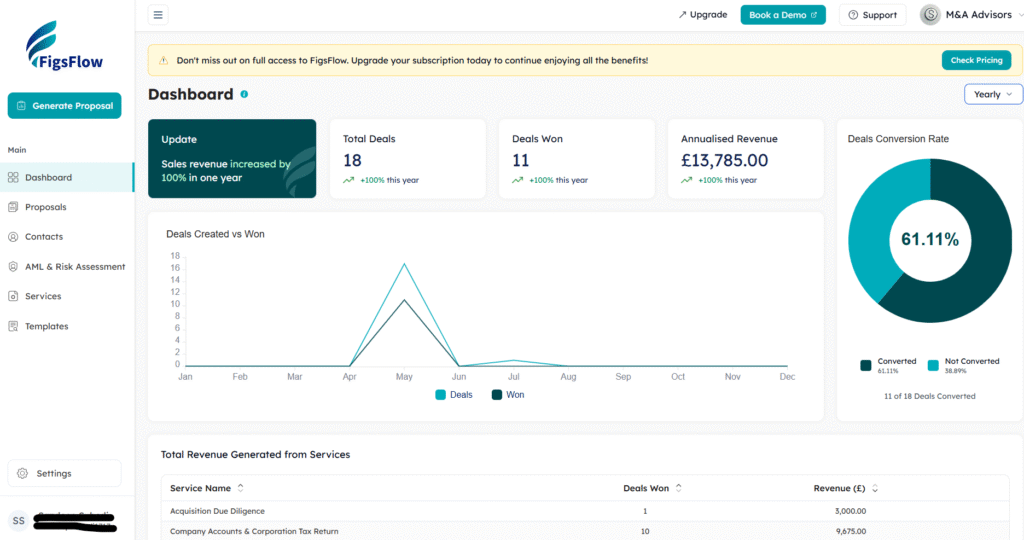
Step 1: Access the Proposal Generator and Select Services
Make sure you’re selecting the right services in your bookkeeping engagement letter to reflect client needs accurately.
Click “Generate Proposal” from your FigsFlow dashboard. The platform opens an interface designed specifically for bookkeeping and accounting services.
Browse service categories on the left panel. Services are organised into bookkeeping, accounts preparation, VAT services, and payroll. Use the search function to find specific services quickly.
Select your bookkeeping services by clicking them from the list. Common selections include monthly bookkeeping, bank reconciliation, VAT return preparation, or payroll processing. You can select multiple services if the client needs a combination.
The system allows you to add multiple clients simultaneously. This proves useful when onboarding several clients from the same business group.
Step 2: Configure Client Details and Set Pricing
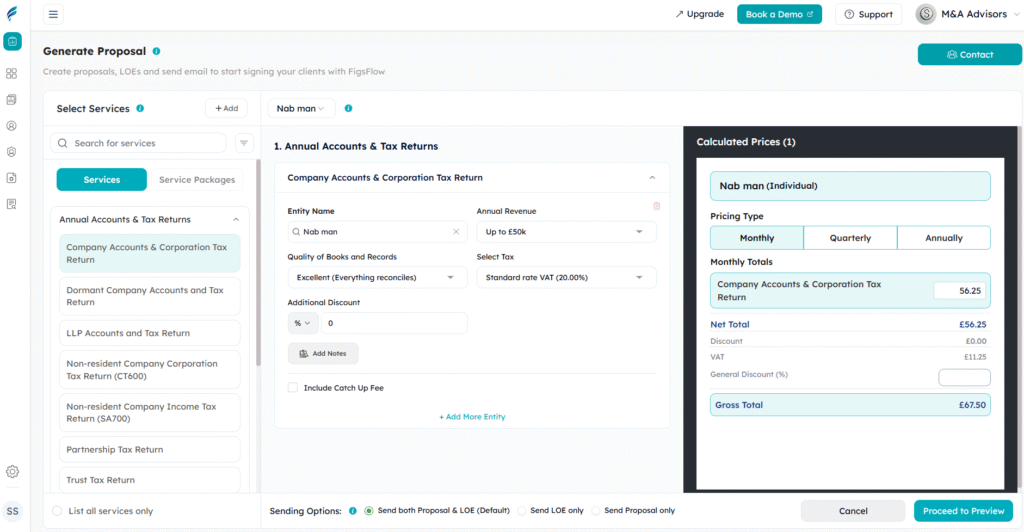
Search and select your client from the entity dropdown. If you’ve integrated FigsFlow with HubSpot, client data imports automatically. Otherwise, select from your contact list or add a new client.
Configure service parameters using dropdown menus. For bookkeeping services, select monthly transaction volume, quality of existing records, and whether they use cloud accounting software.
The pricing calculator displays real-time fees as you make selections. FigsFlow’s algorithm considers transaction volume, record quality, and market rates. The right panel shows monthly, quarterly, and annual pricing with automatic VAT calculations.
Adjust pricing manually if needed. Apply percentage or fixed discounts, and add notes for special arrangements.
Choose your document preference. The default “Send both Proposal & LOE” generates both documents together. Click “Proceed to Preview” when finished.
Step 3: Preview and Send Your Engagement Letter
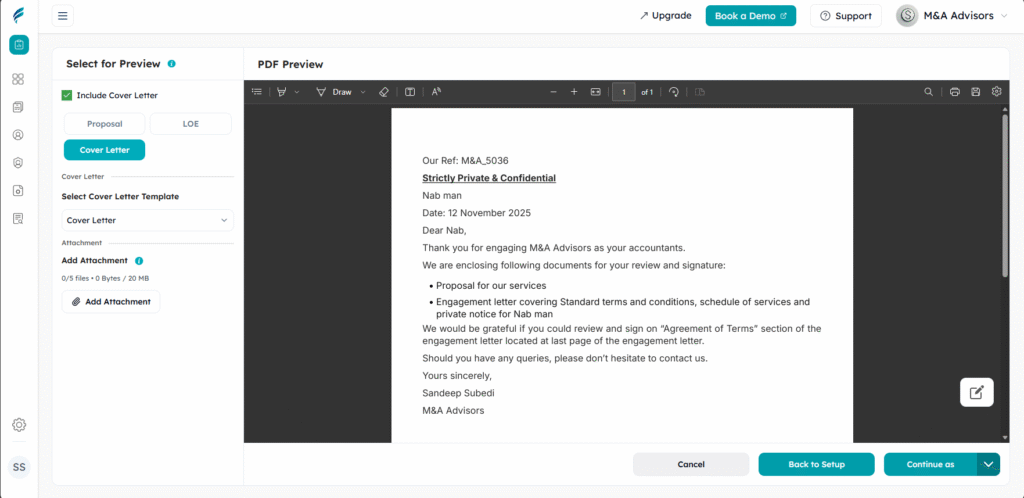
Review the generated document in the PDF preview pane. The system displays your engagement letter with branding, client details, service descriptions, and fees automatically populated.
Toggle “Include Cover Letter” to add a personalised introduction. Add attachments if needed (up to 5 files, 20MB total) such as insurance certificates or professional membership proof.
Switch between tabs to review your proposal and engagement letter separately. Verify all details are accurate before sending.
Click “Send Live” to email documents directly to your client with built-in e-signature functionality. Clients review and sign electronically without leaving their inbox.
Alternatively, click “Save as Draft” to store the document for later. The entire process takes approximately 30 seconds.
Free Bookkeeping Engagement Letter Templates
If you prefer to start with a ready to use structure, FigsFlow provides a suite of free bookkeeping engagement letter templates designed specifically for UK professionals.
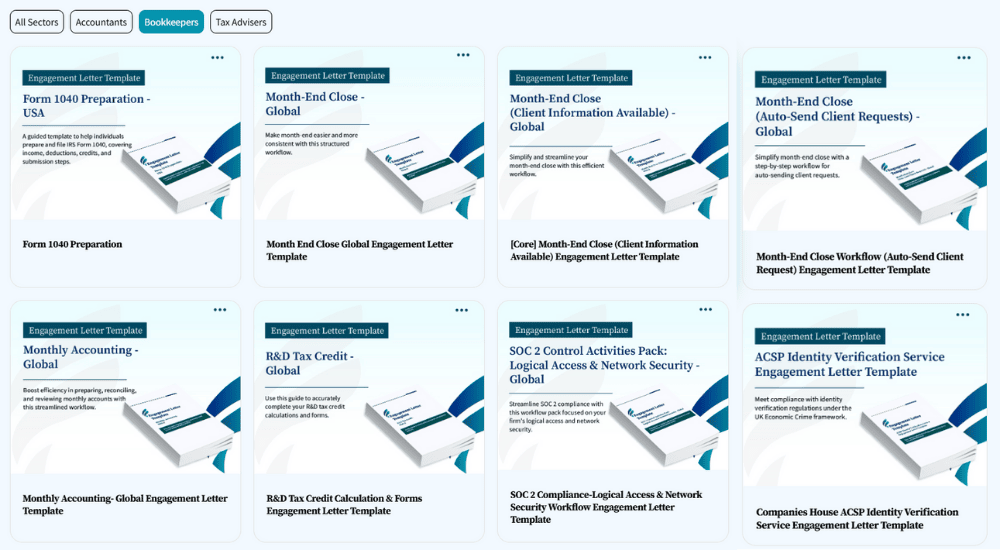
These templates are fully aligned with ACCA, ICAEW, and other UK regulatory body requirements. They cover a wide range of services, from routine bookkeeping and accounts preparation to VAT compliance, payroll, and advisory engagements.
Each template is professionally drafted, easy to customise, and structured to reduce risk while saving you time. You can download, edit, and use them immediately, whether you are onboarding a new client or reviewing an existing engagement.
FigsFlow’s template library is continuously updated to reflect regulatory changes, ensuring your engagement letters remain compliant without manual revisions.
Access the complete library of free bookkeeping engagement letter templates in FigsFlow and start using professionally drafted, UK compliant documents for your client engagements today.
What to Avoid When Writing Accounting Services Engagement Letters
Writing an engagement letter is not just a formality. Small drafting mistakes can create major legal, financial, and client relationship issues later. Knowing what to avoid is just as important as knowing what to include.
Using vague or generic service descriptions Unclear wording around services leads clients to assume additional work is included. Always describe each service precisely to prevent misunderstandings and unpaid scope creep.
Failing to state service exclusions clearly If exclusions are not explicitly documented, clients may believe services such as tax advice or forecasting are included. This can expose you to disputes and unplanned liabilities.
Starting work before the engagement letter is signed An unsigned engagement letter offers little protection if disagreements arise. Always ensure the letter is agreed and signed before any billable work begins.
Reusing outdated or unreviewed templates Old templates may no longer reflect current regulations or your actual service offering. Engagement letters should be reviewed regularly and updated as services evolve.
Ignoring data protection and regulatory obligations Missing or incorrect GDPR and professional compliance clauses can create regulatory risks. Engagement letters must reflect current UK legal and ethical requirements.
Beyond Engagement Letters: What FigsFlow Offers
FigsFlow is a complete client onboarding platform handling everything from initial proposals through compliance checks to signed agreements. Here’s what it offers beyond engagement letters:
- Professional Proposal Generation
- AML Compliance Module
- Secure Document Collection
- Complete Audit Trails
- HubSpot CRM Integration
- Centralised Dashboard
All this is yours at zero cost for the next 30 days. Take full advantage of automated onboarding, compliance checks, and engagement letter generation without commitment.
2026 Update: Mandatory AI & Data Disclosure
Following the March 2026 update to the ICAEW engagement letters help sheet, the guidance now recommends disclosing whether AI or automated software tools are used in delivering the service, along with their limitations. Our template includes the suggested AI and software clauses to reflect this.
Ready to streamline your engagement letter creation? Start your free 30-day trial with FigsFlow today and generate legally sound, compliant letters in just 30 seconds!
Start Your Free Trial NowAdditional Resources
- What is an ACCA-Compliant Engagement Letter? – Detailed explanation of ACCA requirements, mandatory clauses, and official templates for UK accountants
- Engagement Letter vs Letter of Intent: Key Differences Explained – Clear comparison showing when to use each document and why confusing them creates legal risks
- 2025 Anti-Money Laundering ID Check Guide for Accountants in UK – How to integrate identity verification and compliance checks with your engagement letter process
- Engagement Letters for Tax Practitioners | ACCA Global – Official ACCA engagement letter templates, guidance notes, and service schedules updated for 2025
Conclusion
Engagement letters protect your bookkeeping practice from unclear scope, unexpected fees, and misaligned expectations. Every professional bookkeeper needs signed letters before starting billable work.
The essential components are straightforward: define services, state exclusions, specify fees, and include data protection clauses. These create legally binding contracts courts recognise.
Manual letter creation wastes time you could spend serving clients. FigsFlow automates the entire process in three steps, taking approximately 30 seconds from start to send.
Start protecting your practice today. Clear engagement letters build professional relationships that last.
Ready to See FigsFlow in Action?
Discover how FigsFlow generates professional bookkeeping engagement letters in 30 seconds with automated pricing, GDPR-compliant templates, and built-in digital signatures.
Book a Free Demo – See the platform live with our team.
Frequently Asked Questions
What should a bookkeeping engagement letter include?
How often should I update my engagement letters?
Are digital signatures legally binding for engagement letters?
Can I use the same engagement letter for all bookkeeping clients?
What happens if a client refuses to sign an engagement letter?
Run your firm on one platform
Proposals, engagement letters, pricing and AML — built for ACCA, ICAEW, ATT, CIOT, AAT and CIMA firms.